

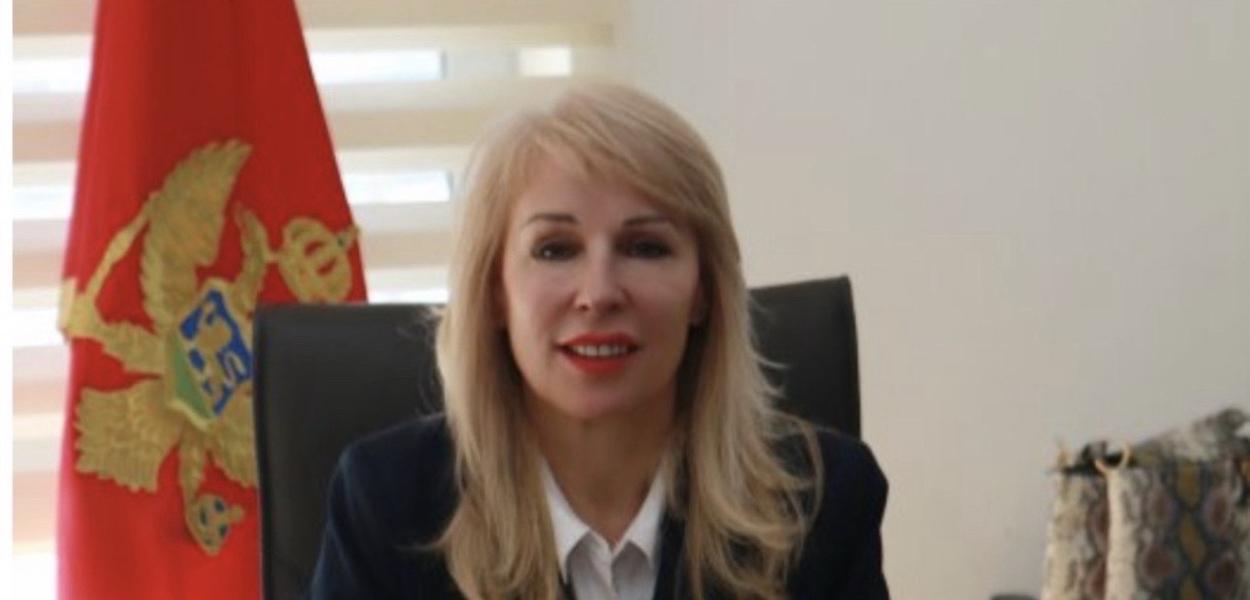
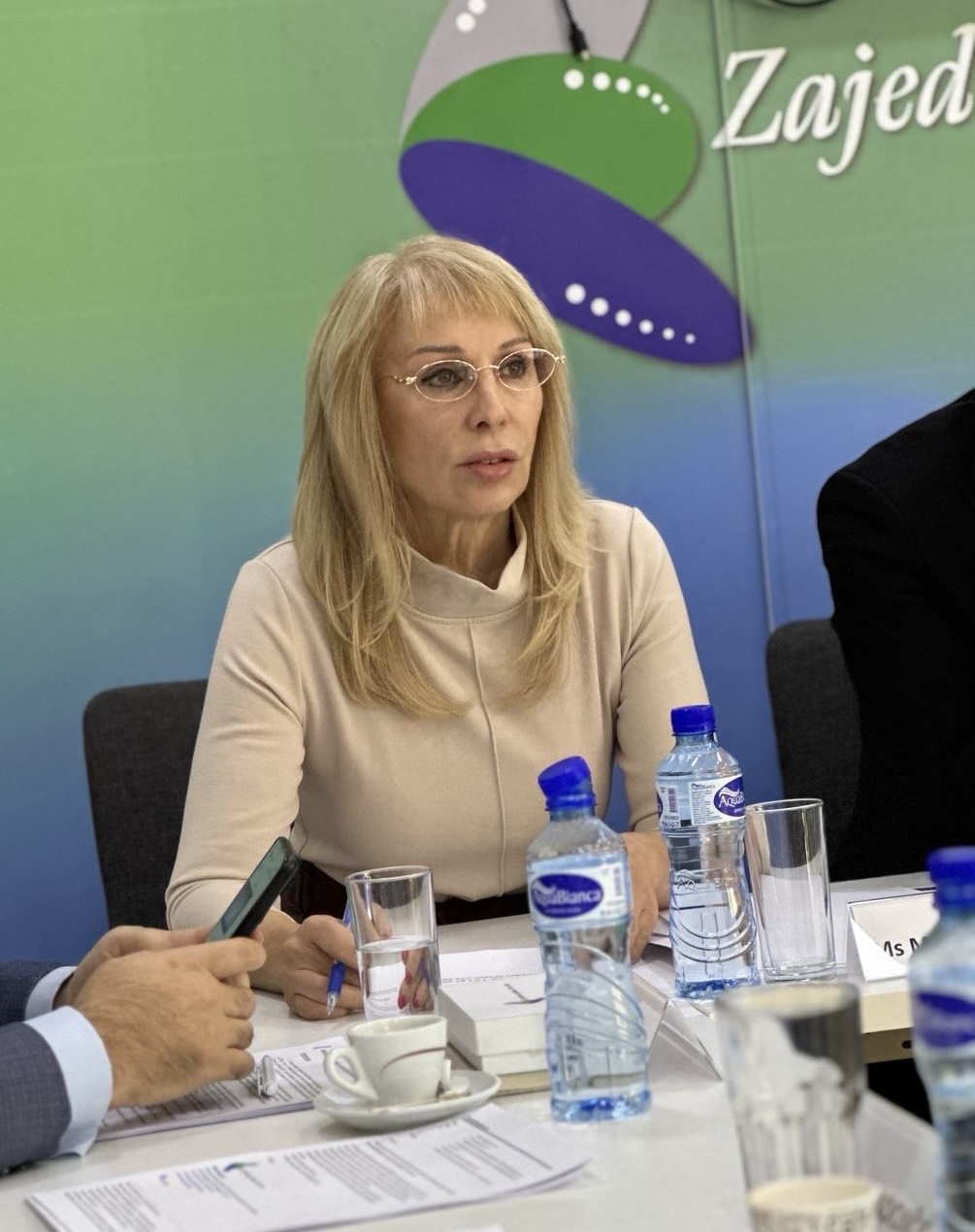
At a time when local governments are facing complex financial, developmental, and demographic challenges, the role of the Union of Municipalities of Montenegro has become more important than ever. Speaking to the ETV portal about municipal budget stability, regional development, the use of EU funds, cooperation with state institutions, and key projects that may influence the long-term development of local communities, the Secretary General of the Union of Municipalities of Montenegro, Mišela Manojlović, shared her insights.
Financial Stabilisation of Municipalities Amid Persistent Systemic Challenges
ETV Portal: What are the key challenges municipalities face in terms of financial sustainability and budget planning?
MANOJLOVIĆ: The financial situation of municipalities has shown a visible recovery over the past two to three years. The adoption of the Law on the Financing of Local Self-Government in 2024 represented an important step towards a more stable revenue distribution system, particularly benefiting municipalities in the northern region, as well as the municipalities of Tuzi and Zeta.
However, challenges persist. The most significant relates to difficulties in collecting property tax, which is the most important source of revenue for municipalities. These difficulties stem from outdated and inconsistent records in the real estate cadastre and the Central Population Register, which serve as the basis for issuing tax decisions. This issue requires a systemic solution and stronger coordination among competent institutions, as it directly affects the stability of local budgets.
In the area of social and child protection, further improvement of the joint financing model between the state and municipalities is necessary to ensure the sustainability of services for the most vulnerable population groups.
It is also important to highlight the practice of assessing the financial impact of legislation on municipal budgets. This process needs further enhancement to allow municipalities to provide timely input, which would contribute to higher-quality budget planning.
More broadly, further efforts toward decentralization are needed, including fiscal decentralisation, as a key precondition for stronger local development.
Cooperation with the State Is Key to the Implementation of Capital Investments
ETV Portal: How does the Union of Municipalities cooperate with state institutions in planning and implementing capital investments? Are there any challenges in this cooperation?
MANOJLOVIĆ: Cooperation between the Union of Municipalities of Montenegro and state institutions exists and, in many areas, yields tangible results. Of particular importance is the restoration of municipal authority over spatial planning and construction, which will accelerate local development. Significant results have also been achieved through cooperation with the Ministry of Finance in the areas of taxation and local government financing, as well as with the Ministry of Public Administration in drafting sector-specific legislation and addressing challenges faced by local governments.
We maintain constructive cooperation with the Parliament of Montenegro, as well as with the majority of ministries.
Budgetary support for the preparation of project documentation is also positive, as many municipalities lack their own resources for this purpose, and without quality documentation, capital investments cannot be implemented.
The Union continuously advocates for solutions that strengthen local-level capacities, while fully respecting the role of the state and regulatory mechanisms, with the aim of achieving sustainable local development.
Regional Development Must Be a Planned and Long-Term Policy
ETV Portal: Does regional development truly exist in Montenegro, or is it addressed only sporadically?
MANOJLOVIĆ: Regional development in Montenegro does exist, and in recent years projects of particular importance—especially for the northern region—have been recognised, notably in infrastructure, tourism, and environmental protection.
Municipalities in the northern region have weaker fiscal capacities and greater dependence on the Equalisation Fund, which limits their ability to finance development projects. Therefore, it is essential for regional development to be a long-term and measurable public policy, based on clear criteria and a planned approach—an area in which the Government of Montenegro has been working in recent years.
Growing Interest and Results in the Use of EU Funds by Municipalities
ETV Portal: Are municipalities successful in using funds from EU programmes and other international sources, and what is the role of the Union of Municipalities in this process?
MANOJLOVIĆ: Municipalities in Montenegro are showing increasing interest in using funds from EU programmes and other international sources. The key challenges remain limited administrative capacity, an insufficient number of qualified experts, and complex procedures.
The Union of Municipalities actively supports this process through training, mentoring, submitting applications on behalf of all municipalities when this is in their joint interest, and through the “Municipalities for the EU” project, implemented with the support of the EU Delegation to Montenegro and the Ministry of Public Administration. Within the project, manuals and guidelines are developed, and networks of municipal project managers and external experts have been established.
During the previous two IPA programming periods, Montenegrin municipalities participated in more than 167 projects with a total value of approximately €124 million.
The Union further provides support through training programmes, on-the-job mentoring, the development of a Practical Guide for Project Writing for Local Governments in Southeast Europe, and the establishment of knowledge- and experience-sharing networks.
Depopulation of the North Requires Integrated and Sustainable Solutions
ETV Portal: What do the demographic data from the most recent census show, and which solutions are realistically feasible?
MANOJLOVIĆ: Demographic data confirm a long-standing issue of depopulation, particularly in the northern region, which possesses significant natural and development potential that has not yet been fully utilised.
In this context, in 2024 the Union of Municipalities prepared the project terms of reference for a Feasibility Study on linking health tourism, complementary treatment methods, other forms of tourism, organic agriculture, environmental protection, and the promotion of healthy lifestyles in Montenegrin municipalities. The aim of the Study is to identify resources, obstacles, and required investments for the development of sustainable programmes that can contribute to local development, the extension of the tourist season, the creation of new jobs, and the reversal of negative demographic trends.
This development path enables municipalities to be branded as BIO and eco destinations and creates a foundation for long-term sustainable local development. The Study is also envisaged under the Smart Specialisation Strategy, making this approach a national—not merely local—development priority.
Significant Projects and Tangible Results of the Union of Municipalities
ETV Portal: Have you managed to initiate all the projects you consider important?
MANOJLOVIĆ: In the previous period, the Union of Municipalities focused on strengthening the capacities of local governments and creating better conditions for their development. Particular emphasis was placed on supporting municipalities in the preparation and implementation of donor-funded and development projects, yielding measurable results. In the past three years alone, more than 90 projects worth over €25 million have been approved for municipalities with the support of the Union.
One of the key achievements was the establishment of the Fund for the Pre-financing of Donor-Funded Projects in 2019, which significantly facilitated access to European and other international funds, especially for municipalities lacking sufficient own resources for initial project financing. To date, municipalities have withdrawn €4.7 million from this Fund, while the Draft Law on the State Budget for the upcoming year envisages €1.5 million for this purpose. The Fund has proven to be an efficient and sustainable mechanism for supporting local development.
The Union also directly participates in the implementation of European projects that bring direct benefits to all municipalities. Of particular importance is the “Municipalities for the EU” project, implemented in partnership with the EU Delegation to Montenegro and the Ministry of Public Administration, with a value of €1 million, aimed at systematically preparing local governments for the EU accession process. Additionally, a new project worth approximately €2 million has been launched in partnership with NALAS, which will provide additional funding for local infrastructure development in all municipalities.
Furthermore, over the past three years, the Union has secured approximately €1.2 million for the preparation of technical documentation for local infrastructure projects, as high-quality documentation is the foundation of any serious investment.
In terms of strengthening human capacities, the Union established a Training Centre, through which more than 70 training sessions have been organised for over 820 local civil servants and employees. Fifteen professional networks of municipal officials have been established, enabling the exchange of knowledge and experience and the harmonisation of practices in key areas of local administration.
During this period, the Union has also been actively engaged in the normative sphere—through initiatives, participation in working groups drafting laws and strategies relevant to municipalities, amendment proposals, and initiatives before the Constitutional Court—contributing to work on more than 180 laws and by-laws. In partnership with the Government and the Parliament of Montenegro, we have participated in the adoption of key regulations in the fields of local self-government, spatial planning, municipal financing, taxation, and communal services, with the aim of strengthening the legal framework and improving the quality of public services for citizens.
Improved Institutional Dialogue with the Government and Parliament
ETV Portal: Do you encounter any obstructions at the local or state level in achieving your goals, obligations, and projects?
MANOJLOVIĆ: Overall cooperation with state institutions has significantly improved over the past two years. There is a noticeable increase in openness to initiatives originating from the local level and a greater willingness to reach joint solutions through dialogue.
The Union of Municipalities strives to strengthen its partnership with the Government, ministries, and Parliament, particularly in the process of drafting laws and public policies that directly affect the functioning of municipalities.
The Union has had a Cooperation Agreement with the Parliament of Montenegro since 2016, enabling participation in parliamentary committee work and cooperation with Members of Parliament in the legislative process. The process of updating this Agreement is currently underway, which will further enhance consultative mechanisms and ensure that the Union receives all draft laws in parliamentary procedure, including those proposed by MPs. This represents a significant step forward in strengthening institutional dialogue.
There is also a Cooperation Agreement with the Government of Montenegro dating back to 2004, which remains in force, and the Union remains committed to its improvement and to strengthening institutional cooperation in the field of public policy development relevant to local self-government.
Our goal is the consistent advocacy of solutions that strengthen the functional and financial autonomy of municipalities, in the interest of balanced development and improved quality of life for citizens.
Source: ETV portal