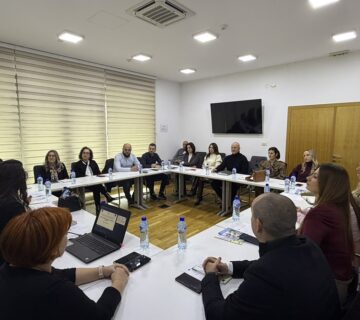


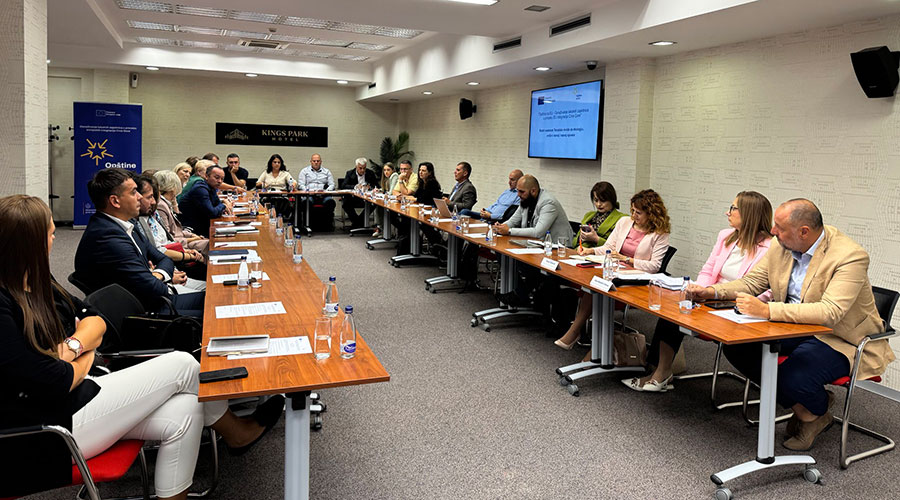
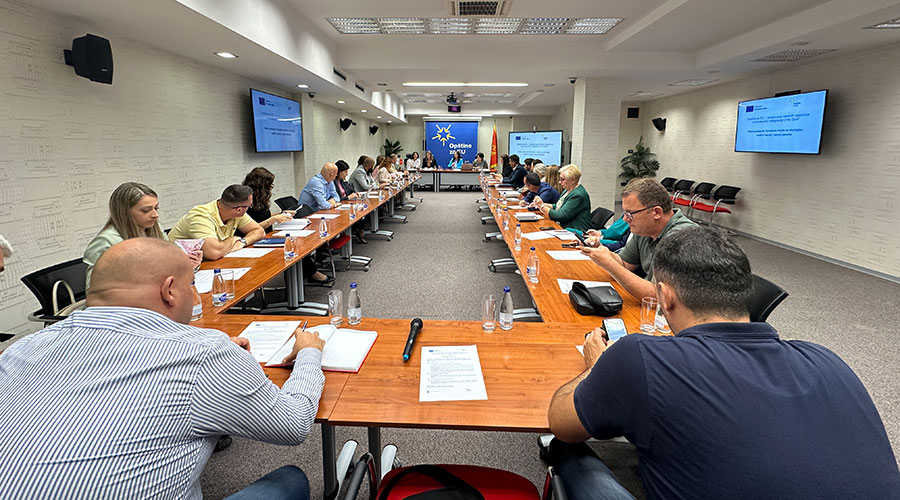
Montenegrin municipalities face a wide range of obligations in the field of environmental protection, arising from new legislation and European directives. At the same time, municipalities also have many opportunities for support in this process, it was assessed at the first meeting of the Thematic Network for Ecology, Sustainable Development, and Development of the North.
The Thematic Network was established within the project “Municipalities for EU – Empowering Local Communities in the Process of EU Integration of Montenegro”, financed by the EU and implemented in cooperation with the Ministry of Public Administration and the Union of Municipalities. Its formation is based on the Memorandum of Cooperation, signed on December 13, 2024, by five ministries, 25 municipalities, and the Union of Municipalities, with the Ministry of Ecology, Sustainable Development and the Development of the North playing a key role in the work of this particular network.
Speaking about the obligations arising from the new Nature Protection Law, currently being drafted by the Ministry, Ilinka Alorić, Acting Director-General of the Directorate for Nature Protection, informed municipal representatives about their responsibilities. These include proclaiming protected natural sites on their territory, financing the preparation of protection studies that describe natural values and protection regimes in detail, adopting management plans for locally protected areas, and reporting on their implementation.
“Municipalities will also have to provide funding for the operation of protected area managers, as well as prepare and submit reports on the state of nature,” Alorić underlined, adding that comments from the scientific community are currently awaited.
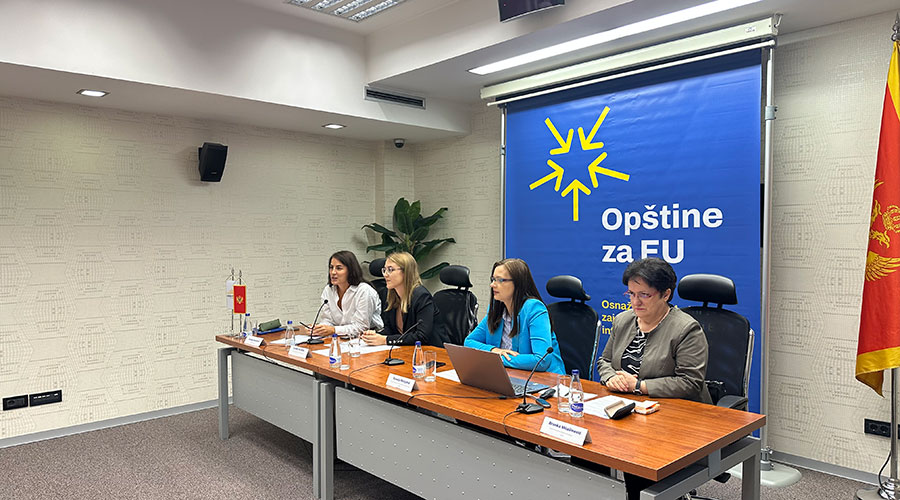
Branka Milašinović from the Directorate for Ecology at the Ministry spoke about the impact of the new Waste Management Law and the Draft National Waste Management Plan for 2025–2029. She stressed that the most visible challenge remains unmanaged landfills, while the new plan envisages the establishment of four regional waste management centers and the introduction of extended producer responsibility. This will enable more efficient and safer waste disposal, a sustainable financing model, and greater availability of funds for recycling projects and the improvement of local systems.
“With the new plan, we are introducing a more sustainable and fairer waste management system through regional centers and extended producer responsibility. However, if local governments do not strengthen their capacities, they will not be able to meet the requirements of the law or take advantage of the opportunities available,” Milašinović emphasized.
Sanela Metjahić from the Directorate for International Cooperation and EU Funds pointed out the importance of European directives in the field of environmental protection and the role of local governments in their implementation. She reminded municipalities that these obligations should not be seen merely as pressure, but also as an opportunity to improve services, attract funding, and contribute to sustainable development by aligning with EU standards.
Ana Stanišić Vrbica from the EU Delegation to Montenegro emphasized that the Government of Montenegro has set an ambitious goal to adopt the complete legislation in the field of environmental protection and climate change by the end of July 2026. She noted that the EU places particular focus on biodiversity protection, air quality, and waste management policies, including the elimination of illegal dumpsites.
“Funds are available, and municipalities need to find mechanisms to make use of them, with the Delegation remaining open to assisting in communication with citizens. Our goal is for Montenegro to enter the EU clean – without illegal dumpsites and with a strong nature protection policy,” Stanišić Vrbica stressed.
She added that on June 5, with the support of the EU Delegation, a national environmental campaign “Protect so it protects you” was launched, which will last until Montenegro’s EU accession. The campaign introduces new mechanisms for reporting and monitoring cases of violations and crimes in the field of environmental protection. Cases of devastation and illegal exploitation of natural resources can be reported via the platform www.cuvaj.me.
Sanja Živković, Secretary of the Committee for Communal Activities and Environmental Protection of the Union of Municipalities, highlighted the key challenges faced by local governments – the lack of professional staff, insufficient technical infrastructure, and low salary policies. She also emphasized the need for inter-municipal networking, recalling the positive results achieved through the established network of environmental officers within the Union of Municipalities, as well as the importance of strengthening capacities to attract donor and other funds in order to overcome existing stagnation and ensure sustainable solutions.
“Without strengthening professional capacities, adequate salary policies, and networking, local governments will struggle to meet the complex demands of the European environmental agenda,” Živković concluded.