


Nina Blažić
Directorate for Local Self-Government, Ministry of Public Administration
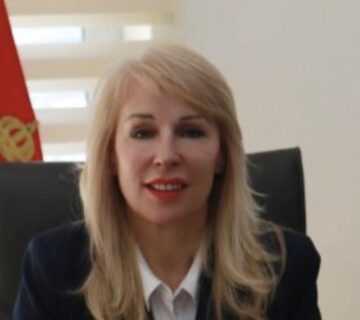
I have the privilege of leading a team that is implementing one of the most demanding, yet also one of the most important, reform processes in Montenegro’s contemporary public administration. The Directorate for Local Self-Government within the Ministry of Public Administration is responsible for creating the legal and institutional framework for the functioning of municipalities – from drafting legislation and monitoring its implementation, to providing expert support to local self-governments and proposing corrective measures when necessary. Our responsibility is to ensure that citizens exercise their constitutionally guaranteed right to local self-government, because local self-government is not merely a level of authority, but the right of every individual to participate in resolving issues of direct importance to their everyday lives.
At the beginning of the mandate, we were faced with a series of assessments that ranked Montenegro among the most centralized countries in Europe. A monotypic model of local self-government organization, a fragmented legal framework for local civil servants, frequent political instability at the local level, and recurring elections limited both the efficiency of municipalities and citizens’ trust in the system.
Our response was clear: we want local self-government that is efficient, accountable, transparent, and genuinely focused on citizens’ needs. This is the vision of a modern, decentralized governance system that strengthens local communities while demanding greater responsibility from local authorities. Turning such an ambitious vision into reality required courage, expertise, integrity, and teamwork.
Accordingly, we launched a comprehensive reform cycle:
– We prepared a new Law on Local Self-Government, introducing the concept of asymmetric decentralization and, for the first time, recognizing cities as a distinct unit of local self-government. Cities will assume responsibilities in the areas of preschool education, social and child protection, and primary health care – but only upon demonstrating the capacity for responsible governance.
– For the first time, a Law on Local Civil Servants and State Employees was prepared, providing a unified, systematic, and merit-based framework for human resource management at the local level.
– Together with a team of experts, we developed the concept of the Law on Local Elections, whose solutions have already been implemented through amendments to the Law on the Election of Councillors and Members of Parliament. Montenegro will, for the first time, hold all local elections on the same day, introduce professionalized electoral bodies, and increase women’s representation at both the national and local levels. However, our concept goes further: we advocate full democracy through the direct election of mayors and their deputies, open electoral lists, and the direct election of local community bodies.
– For the first time, we conducted a comprehensive Analysis of the Functioning of the Local Self-Government System, based on a methodology recognized by SIGMA/OECD partners as an example of good practice and recommended to other countries. The findings of this analysis were subsequently confirmed in the European Commission’s reports for 2024 and 2025, as well as in reports by SIGMA/OECD and the Council of Europe.
– We introduced mechanisms to strengthen the accountability of local authorities and enhance citizen participation, including performance evaluations of local self-governments, regular measurement of citizen and business satisfaction, and citizens’ assemblies as a form of deliberative democracy.
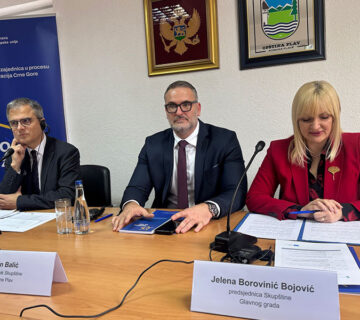
Our partnership with the Delegation of the European Union to Montenegro and the Union of Municipalities, through the project Municipalities for the EU, has proven invaluable. Through this project, we are improving cooperation mechanisms between the two levels of government, strengthening the capacities of local self-governments to apply for and implement EU-funded projects, and bringing the European Union closer to citizens through EU Info Points that are already established and actively operating across Montenegro.
All of this introduces a new governance logic: from administrative to partnership-based, from formal to accountable, and from politically burdened to professional.
Within the comprehensive reform of local self-government, digital transformation occupies a special place. Aware that modern public administration cannot be effective without digital solutions, we have focused on laying the foundations for the modernization of local services, improving processes, and reducing administrative barriers.
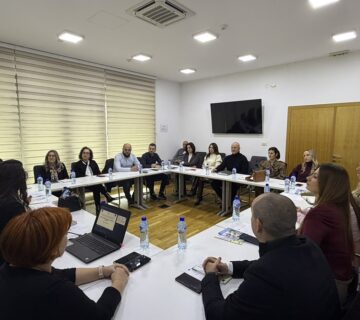
This process is being carried out in close cooperation with the Ministry’s digitalization team, whose expertise, openness, and readiness for a partnership-based approach provide strong support. The experience of our team in the Directorate for Local Self-Government, combined with the expertise of colleagues from the digital sector, has proven to be an ideal combination for developing solutions that are sustainable, user-oriented, and aligned with European standards.
Values That Have Shaped Our Work
Reforming local self-government is one of the most complex processes in public administration and must be grounded in clear values:
– Teamwork, because no reform belongs to an individual – it belongs to the team that implements it.
– Empathy, because effective solutions can only be created if we listen to and understand the needs of municipalities, civil servants, and citizens.
– Integrity, as the foundation of professional decision-making in the public interest.
– Vision, which gave us the courage to challenge established patterns.
– Responsibility, as the cornerstone of citizens’ trust in institutions.
– Respect, as the basis of all good cooperation.
A Team That Makes a Difference
The Directorate for Local Self-Government is staffed by a numerically small, yet exceptionally dedicated and hardworking team, where experience and freshness, expertise and enthusiasm, professionalism and humanity come together. It is a team that analyzes, proposes, thinks critically, and shares a vision of change. My greatest professional privilege is working with people who believe that the system can be improved and who selflessly invest their energy and knowledge toward that goal.
Support That Made the Difference
No matter how skilled and motivated a team may be, any public policy that seeks to change systemic patterns must also have the support of decision-makers. This reform enjoyed full and consistent support from the Minister of Public Administration, Marash Dukaj, whose commitment to the public interest was crucial in opening complex issues and persevering in the effort to make local self-government in Montenegro a true service for citizens.