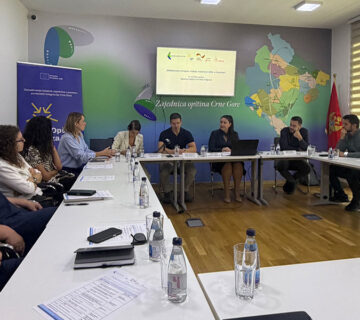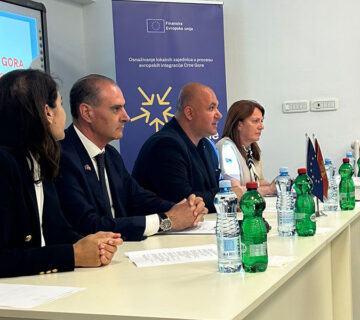


The Montenegrin municipalities of Bijelo Polje, Kolašin, and Plav are among the 25 Transfer Networks approved at the Monitoring Committee meeting of the URBACT IV Programme.
Over the next 30 months, these three municipalities will work on:
- Transferring an inclusive public transport model from Portugal, designed for areas with low population density;
- Adapting and transferring a participatory tool from Italy aimed at preserving natural resources; and
- Transferring a Hungarian practice that promotes low-carbon, nature-based community solutions to mitigate the impacts of floods and droughts.
The total budget of the approved projects involving these municipalities amounts to approximately €2.2 million, while the budget for the Montenegrin partners is around €235,000, with 95% co-financing provided through non-repayable EU funds. The projects will officially start on 1 November 2025.
These three municipalities join six other Montenegrin municipalities already participating in the URBACT IV Programme, implementing projects through regular calls for Action Planning Networks, Transfer Networks, and within the URBACT Pioneers Accelerator—a special learning programme created for the Western Balkans.
The Transfer Networks enable cities to jointly adapt and reuse good practices already implemented in one city, while also improving them based on experiences gained through replication. The call for proposals was open from April to June this year, attracting 39 project applications from cities and municipalities across Europe.
URBACT IV is a European Territorial Cooperation Programme aimed at promoting integrated and sustainable urban development, improving local policies, and enhancing governance at the city and municipal level. The programme includes all 27 EU Member States, as well as Norway, Switzerland, and EU candidate countries — Montenegro, Albania, Bosnia and Herzegovina, Moldova, North Macedonia, Serbia, and Ukraine. The Programme is co-financed by the European Union.
Source: www.eu.me