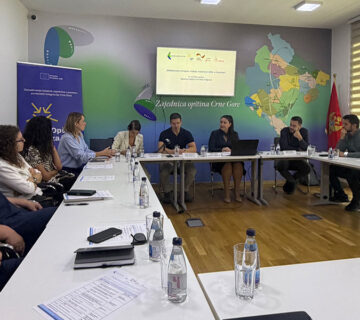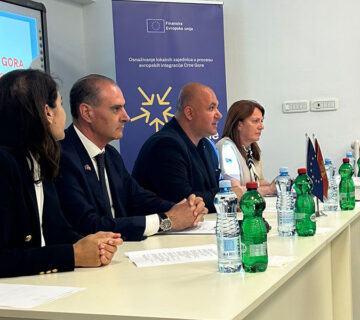


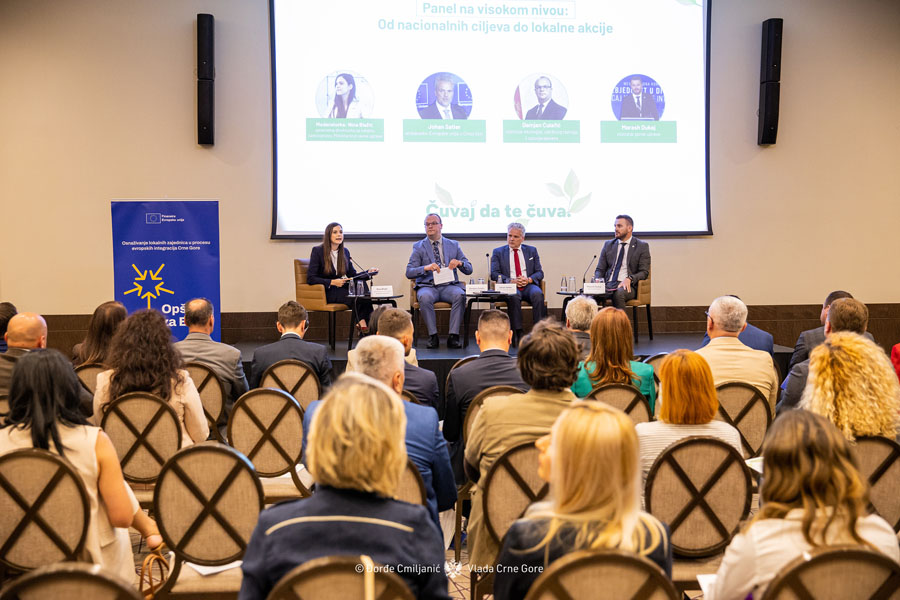
The conference “Municipalities for the EU – The Impact of European Integration on Local Self-Governments in the Field of Environmental Protection” was held, organized by the Ministry of Public Administration and the Ministry of Ecology, Sustainable Development and Northern Development, with the support of the Delegation of the European Union to Montenegro.
The event gathered representatives of state administration, local self-governments, international partners and experts, with the aim of strengthening dialogue and cooperation in the context of fulfilling the obligations from Chapter 27 – Environment.
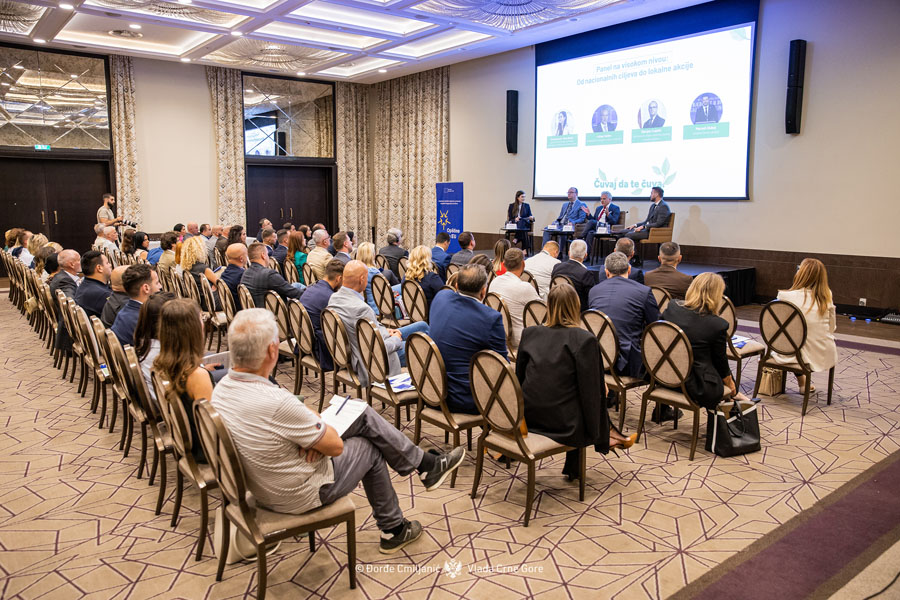
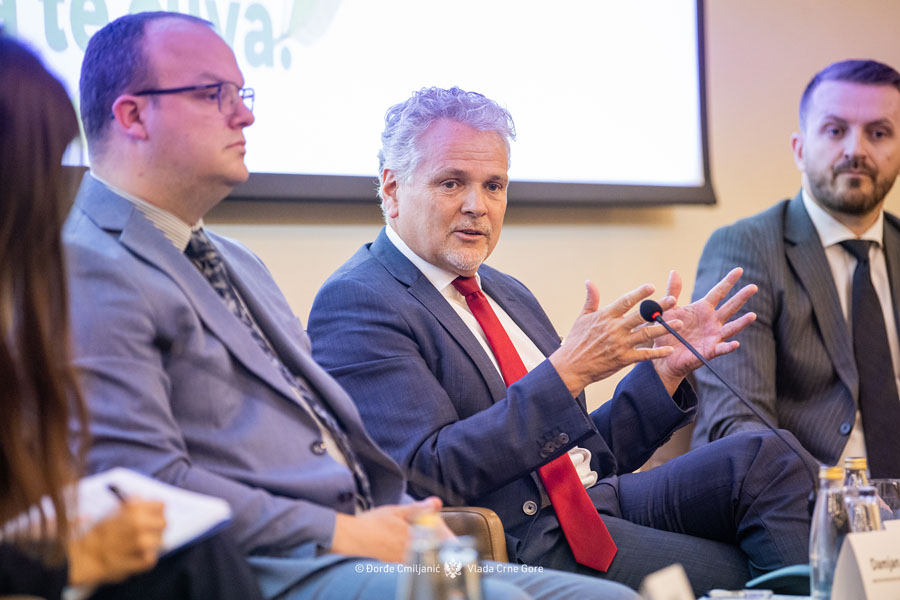
At the high-level panel, the Ambassador of the European Union to Montenegro, Johan Satler, emphasized the natural beauty of Montenegro and the need to preserve its resources in the process of European integration.
He reminded that the country must fulfill eight key benchmarks in order to close Chapter 27, including areas of air quality, water, and waste management.
“We have a lot to do in order to close Chapter 27 and we need to use this momentum to make a major leap forward so that Montenegro enters the EU prepared,” said Satler, emphasizing the importance of proper implementation of laws and regulations, as well as education and cooperation of all stakeholders.
The ambassador announced concrete activities such as the procurement of a shredder for recycling old tires, which will cover the needs of the entire country, as well as plans for the further reduction of plastic bag use.
He also emphasized that the cleaning of five large illegal dumpsites, including Ćemovsko polje, will soon begin.
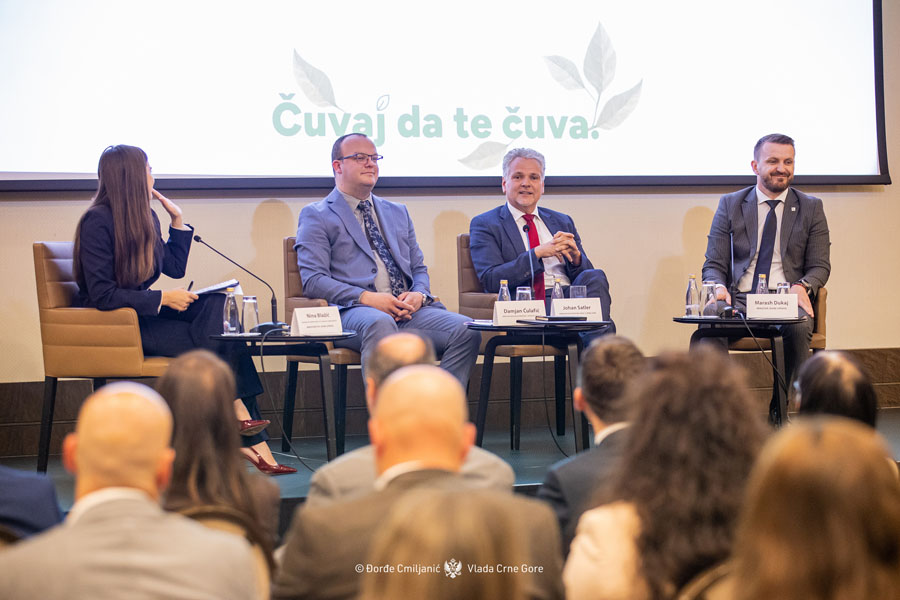
The Minister of Ecology, Sustainable Development and Northern Development, Damjan Ćulafić, emphasized the commitment of the Ministry to fulfilling the obligations from Chapter 27, stressing that this is a complex task in an area that has been neglected.
“It is a difficult job, because this is quite a neglected area, but we all share the responsibility. Time has shown that there was a trend of progress, but there is a great deal of work ahead of us,” said Ćulafić.
He announced the adoption of key environmental laws during this year, including the Law on Nature Protection, the Law on National Parks, the Law on Climate Change, and the Climate Change Adaptation Plan.
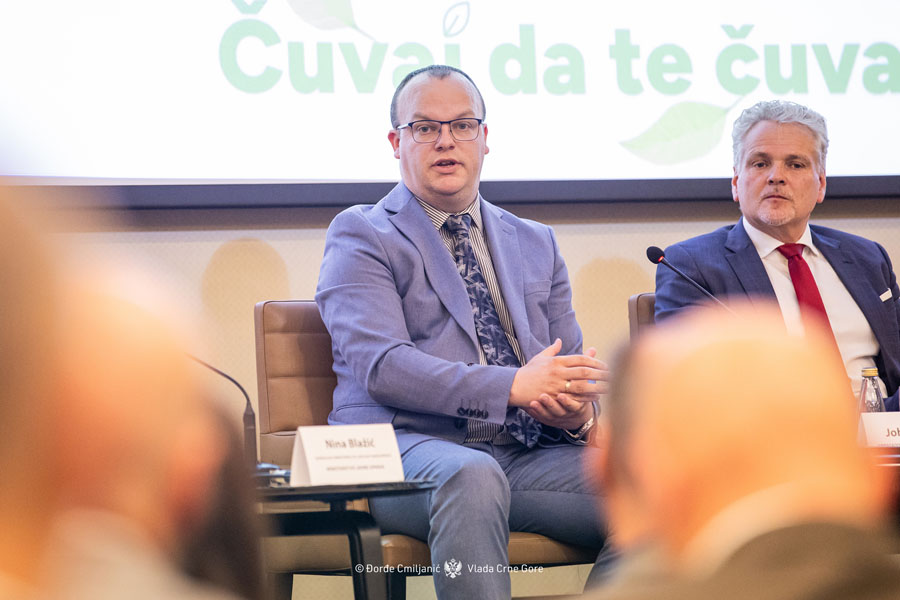
He also highlighted the importance of fulfilling the obligations from the Reform Agenda and the development of the Low-Carbon Development Strategy with the support of the World Bank. Speaking about the fight against illegal dumpsites, the minister stated that there are currently 334 such sites in Montenegro, of which about 40 have been removed in the past two years, and the removal of another twenty is planned by the end of the current year.
“Cleaning Montenegro from illegal dumpsites must be a joint effort of the state and local self-governments, with full mutual understanding,” emphasized Ćulafić, also pointing to the problem of lack of institutional capacities and the need for a more efficient inspection service.
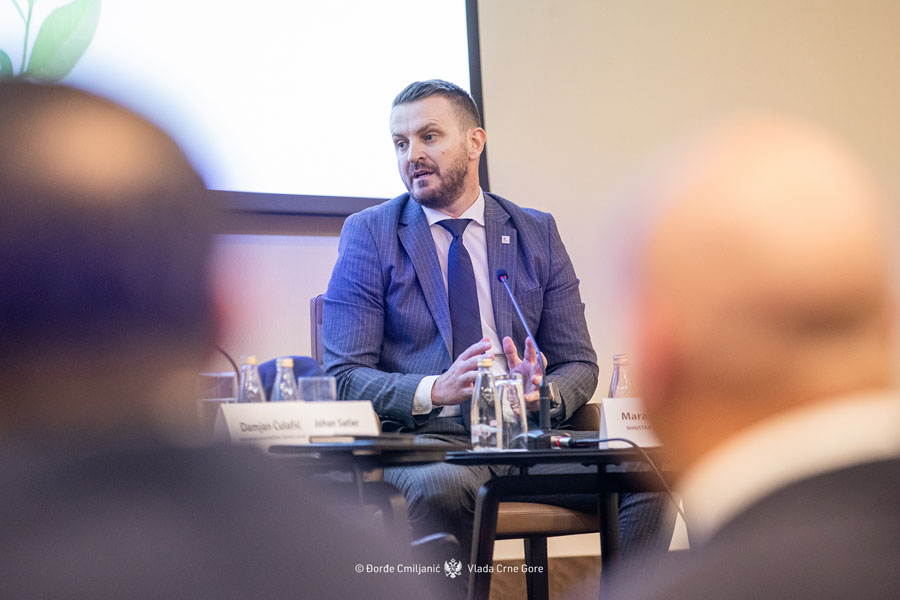
The Minister of Public Administration, Mr. Marash Dukaj, reminded that inclusion, dialogue and partnership are the foundation of the successful implementation of public policies at the local level.
“Municipalities must be included, not because of authorities and leadership, but because of the citizens, so that citizens are consulted in every process,” said Dukaj.
He stated that a comprehensive analysis of the local administration system has been carried out, which showed that Montenegro is one of the most centralized countries, and that public policies were often not aligned with local needs due to a lack of consultations.
“Without a change in approach, there can be no essential reform. The approach is what makes the difference between declarative and real transformation and reform,” said Dukaj, emphasizing that the Ministry has completed work on the new Law on Local Self-Government, which gives greater responsibility and autonomy to municipalities.
The conference continued through thematic panels where representatives of municipalities, public utility companies, national parks, civil society, and environmental experts exchanged experiences on smart waste management, biodiversity conservation, and improvement of local environmental policies.
The “Municipalities for the EU” initiative was created as a result of the Memorandum of Cooperation, signed in December 2024 between all local self-governments and the relevant ministries, with the goal of creating thematic networks that will enable better coordination and joint action in environmental protection.