


By the time Montenegro joins the European Union, it is expected that all municipalities will establish local EU Integration Offices – dedicated teams responsible for informing citizens about the changes brought by EU membership, while strengthening the connection between the local and national levels in the accession process.
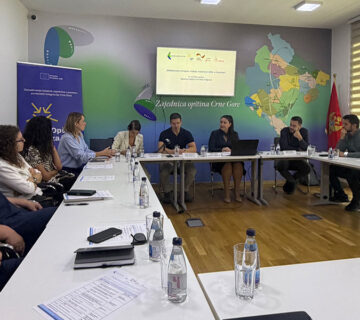
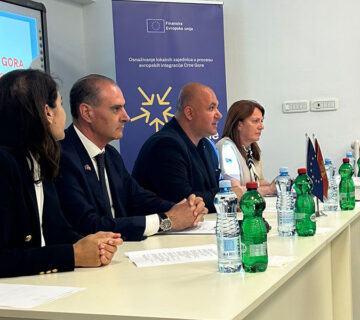
The establishment of these offices is envisaged under the new Law on Local Self-Government, which is expected to be adopted by the Parliament of Montenegro soon. The project “Municipalities for EU – Empowering Local Communities in the Process of European Integration of Montenegro” will provide support to all municipalities in establishing these offices, training civil servants, and strengthening their capacity to implement European policies.
In the RTHN programme “Novsko Jutro” (Morning in Herceg Novi), this topic was discussed by Branka Mračević, Team Leader of the “Municipalities for EU” project, and Mitar Kisjelica from the Secretariat for International Cooperation and Social Affairs of the Municipality of Herceg Novi.
Branka Mračević underlined that future EU Integration Offices within municipalities will have a key role in bringing European policies closer to citizens and enhancing cooperation between local and national institutions throughout the EU accession process.
“EU Integration Offices will become a crucial mechanism linking the local and national levels during the accession process. Their role goes beyond providing information – they will coordinate the implementation of EU policies at the local level, identify community needs, develop project initiatives, and enable citizens to directly experience the benefits of European integration. They will act as a bridge between municipalities, central institutions, and citizens, ensuring that the changes brought by EU membership are understandable, accessible, and beneficial for everyday life,” said Mračević.
The “Municipalities for EU” project is already providing extensive support in strengthening the capacities of local administrations. As Mračević explained, during the first year of project implementation, 107 civil servants from all 25 Montenegrin municipalities were trained in the areas of strategic planning, preparation and implementation of EU projects, and communication.
“Two key publications have been produced – the Guide on the Role of Municipalities in the European Integration Process and the Manual on Available EU/IPA Funds for Local Governments in Montenegro. These documents offer practical guidance, examples, and recommendations for local officials,” Mračević noted.
Speaking about the importance of these publications and the cooperation with the project team, Mitar Kisjelica praised their quality and practical relevance for strengthening local government capacities:
“The Guide and the Manual are extremely valuable documents because they offer concrete examples and models adapted to our system. Through direct cooperation with the project team, we better understand how to approach EU funds and how to develop new project ideas,” Kisjelica said.
Mračević also reminded that the project focuses on five thematic areas of particular importance for local governments: transport, agriculture, social policy, digitalisation of public administration, and environmental protection.
According to her, if Montenegro closes all negotiation chapters by 2026, EU membership in 2028 will be an achievable and realistic goal. The “Municipalities for EU” project will continue until September 2027, with the possibility of a three-year extension, ensuring ongoing support to municipalities even after Montenegro’s accession to the European Union.
“Upon joining the EU, Montenegro will gain access to the most significant structural and cohesion funds, whose financial envelope for member states in the 2021–2027 period currently exceeds one billion euros. Our task is to prepare local governments to use these funds strategically and sustainably – for projects that reduce development disparities, improve infrastructure, and enhance the quality of life for citizens. The readiness of local communities is at the core of a successful European integration,” emphasised Mračević.
The importance of continuous training and knowledge exchange was also highlighted by Kisjelica:
“Our team in Herceg Novi consists of four people, already experienced in implementing large projects. The knowledge we gain helps us to better organise our work and prepare for the obligations that EU membership will bring. As a local government, we are the citizens’ first point of contact with European processes and we have the responsibility to clearly explain all the changes that are coming.”
Concluding the interview, Mračević underlined that the project’s ultimate goal is for each of Montenegro’s 25 municipalities to have a functional, professional, and independent EU Integration Office by the time the country joins the European Union — serving as a pillar of local development and a reliable partner to central institutions in implementing European policies.