

Through the Operational Programme “Employment and Social Inclusion 2024–2027”, Montenegro has more than €31.6 million at its disposal to improve employment, social inclusion, and strengthen institutional capacities, with a significant portion of the funds earmarked for local self-governments. The support will focus on the employment of young people and vulnerable groups, skills development and lifelong learning, strengthening the capacities of the Employment Agency, and the development of social entrepreneurship. Special emphasis is placed on combating poverty, child protection, the development of community-based social protection services, and strengthening systems to combat gender-based violence.
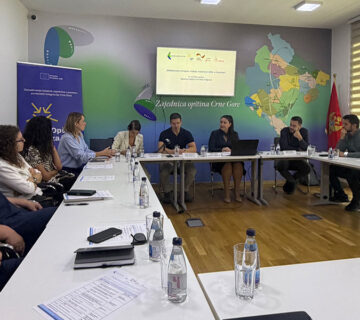
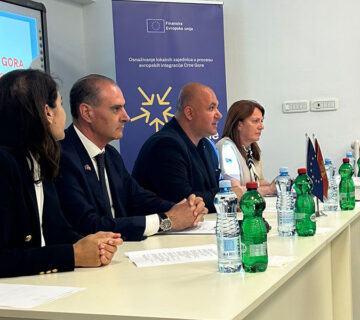
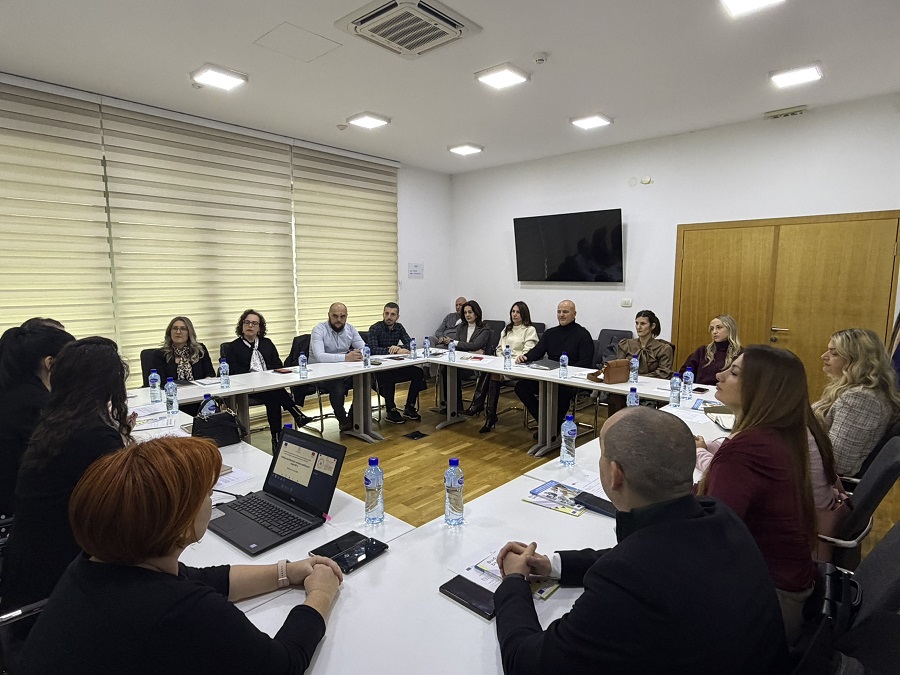
The aim of the investments is to make the labour market more accessible and resilient, and the social protection system more efficient and aligned with European Union standards, so that citizens can already feel tangible benefits of the European path in the pre-accession phase. This was announced at a working meeting of the Thematic Network for Social Protection, Demography and Family Care, organized by the Union of Municipalities of Montenegro within the project “Municipalities for the EU – Empowering Local Communities in Montenegro’s EU Integration Process.”
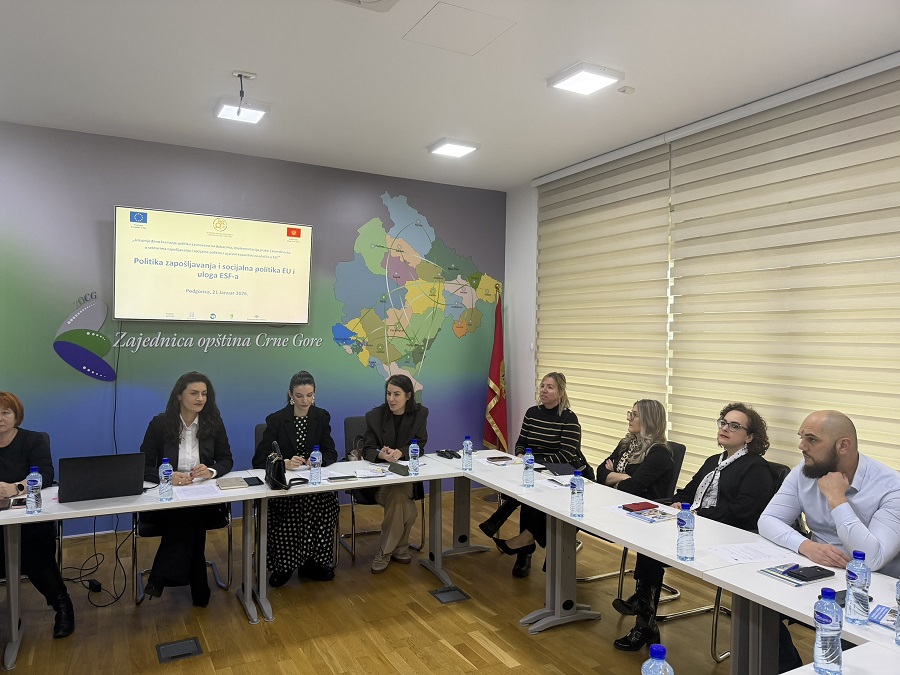
Vanja Hazl, Project Manager of “Improved Evidence-Based Policymaking, Implementation of Practices and Coordination in the Employment and Social Policy Sectors, and Strengthened Capacities for Participation in the European Social Fund,” highlighted that the European Social Fund, as the EU’s main instrument for investing in people, is gaining increasing importance, noting that its share of the EU budget has grown from about one to nearly ten percent.
“These are funds from the Operational Programme ‘Employment and Social Inclusion 2024–2027’, financed through the IPA III fund, with nearly €27 million provided directly by the EU. The programme is part of a broader policy based on the European Pillar of Social Rights, which sets out 20 principles in the areas of equal opportunities, fair working conditions, and social protection, with the aim of ensuring that economic development is accompanied by greater social security for citizens,” Hazl emphasized.
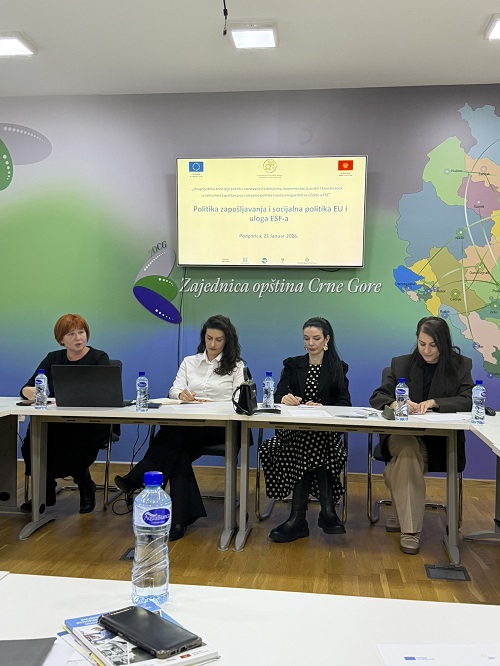
The meeting was opened by Branka Mračević, Team Leader of the “Municipalities for the EU” project, who stressed that the goal of such meetings is to ensure that municipalities are ready to use European funds for employment and social policy.
“The European Social Fund is an important instrument that can directly improve the quality of life of citizens, and our task is to equip local self-governments to recognize and make use of these opportunities,” said Mračević.
Maja Bahović, Head of the Directorate for Coordination of Social Work Centres at the Ministry of Social Welfare, Demography and Family Care, pointed out that amendments to the Law on Social and Child Protection represent an important step toward linking social security and employment. As she explained, beneficiaries of material support will retain their entitlement during participation in active labour market policy measures and for up to 12 months after employment through the Employment Agency.
“In this way, we encourage employment while also protecting beneficiaries from a sudden loss of social security,” Bahović stated, adding that this approach is fully aligned with EU social policy.
Speaking about reforms in the field of disability, Bahović recalled that in October 2025 the Law on Unified Disability Assessment was adopted, which will introduce a single, human rights–based model as of 1 July 2026, in line with the UN Convention on the Rights of Persons with Disabilities, thereby abolishing more than 40 existing assessment commissions.
On behalf of the Union of Municipalities of Montenegro, Ivana Nedović, Secretary of the Committee for Social Affairs, welcomed the participants, emphasizing that municipalities are where European policies are translated into concrete changes in citizens’ lives.
“This fund represents an opportunity for municipalities to address challenges such as unemployment, youth emigration, and social exclusion through programmes of professional training, entrepreneurship support, and the improvement of local social services,” said Nedović, underlining the importance of partnerships between municipalities, institutions, civil society, and the business sector.
She added that systematic investment in training staff who will prepare and implement projects financed by the European Social Fund is essential.
During the discussion, participants exchanged views on the challenges faced by local self-governments and the opportunities to use European funds to develop employment programmes, the social economy, support for young people and vulnerable groups, as well as new community-based services.
The Union of Municipalities of Montenegro stated that it will continue to support municipalities through training, information-sharing, and networking, in order to ensure that European funds are used as effectively as possible for the development of local communities and the improvement of citizens’ quality of life.