

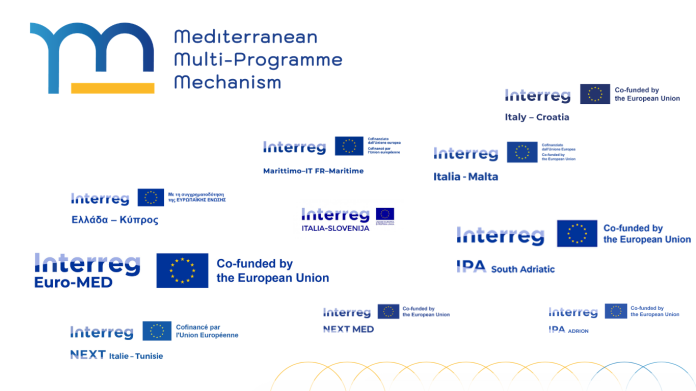
The Mediterranean Multi-Programme Mechanism (MMM) is a cooperation framework that brings together several Interreg programmes with the aim of strengthening coordination, aligning activities, and making more efficient use of resources across the Mediterranean region.
The Mechanism was established in May 2023 in Florence (Italy), during the event “Towards Sustainable Tourism in the Mediterranean”. Its further development was confirmed at the event “Paths that Last – Cooperation for Sustainable Tourism in the Mediterranean”, held in June 2025 in Split (Croatia). Through thematic workshops and roundtable discussions, key priorities were identified and the foundations were laid for the preparation of a coordinated call for project proposals. The Mechanism was initiated by the Interreg Euro-MED, Interreg Italy–France Maritime, and NEXT MED programmes. It was subsequently joined by Interreg Greece–Cyprus, Interreg Italy–Croatia, Interreg Italy–Malta, and Interreg Italy–Tunisia. During 2025, Interreg Italy–Slovenia, Interreg IPA South Adriatic, and Interreg IPA ADRION also joined the initiative, increasing the number of full members to ten.
Information on the Call
The Mediterranean Multi-Programme Mechanism Call is not a joint call, but rather a coordinated initiative of the programmes participating in the Mechanism. Each programme independently publishes the call, allocates its own available funding, and implements its own application and project selection procedures, while the thematic focus and strategic objectives are shared by all participating programmes.
Montenegro participates in three programmes that are part of the Mechanism, two of which are involved in this coordinated initiative: Interreg Euro-MED and Interreg IPA South Adriatic.
A joint Info Day will be held online on 16 June 2026, from 9:45 to 11:00 CET. Registration is open to all interested organisations and institutions, and the draft agenda is available here.
Why Sustainable Tourism?
The Mediterranean is the world’s leading tourism destination, accounting for 35% of all international tourist arrivals and 30% of global tourism revenues. At the same time, it is a region particularly vulnerable to the impacts of climate change, warming approximately 20% faster than the global average.
Growing pressure on natural resources, biodiversity loss, increased water and energy consumption, as well as social challenges linked to the seasonal nature of the tourism economy, all point to the need for more sustainable tourism development models.
Recognising these challenges, the Mediterranean Multi-Programme Mechanism selected sustainable tourism as its first joint pilot area of cooperation. Sustainable tourism is a shared priority for all programmes involved in the Mechanism and provides a basis for strengthening cooperation, aligning policies, and achieving long-term positive impacts on Mediterranean territories and communities.